
For years, businesses focused on one goal:
Rank #1 on Google.
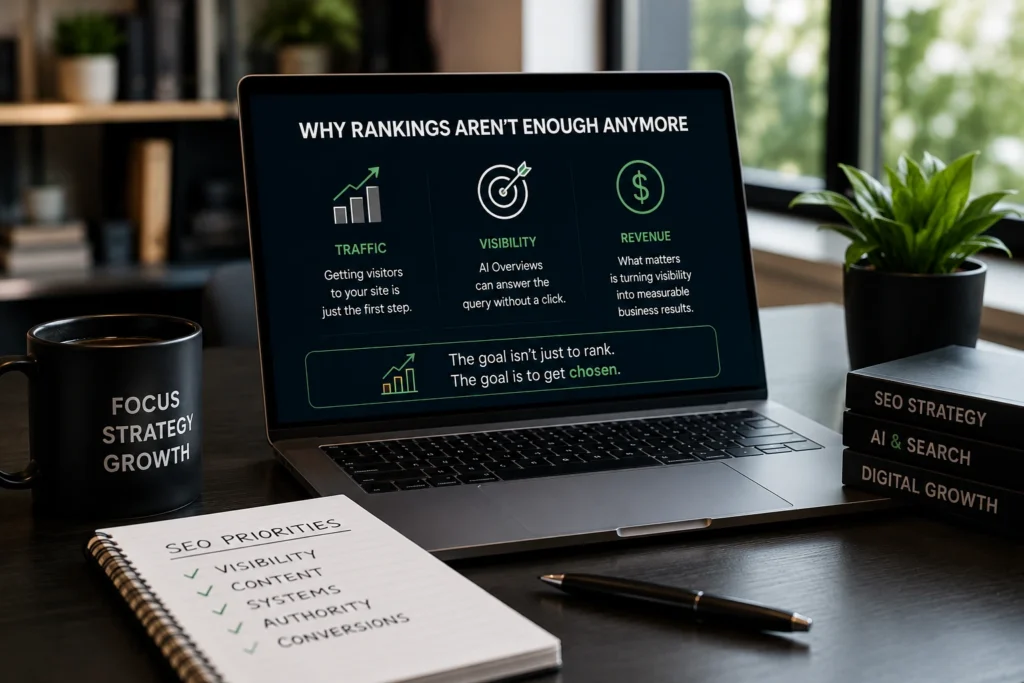
Today, that’s no longer enough.
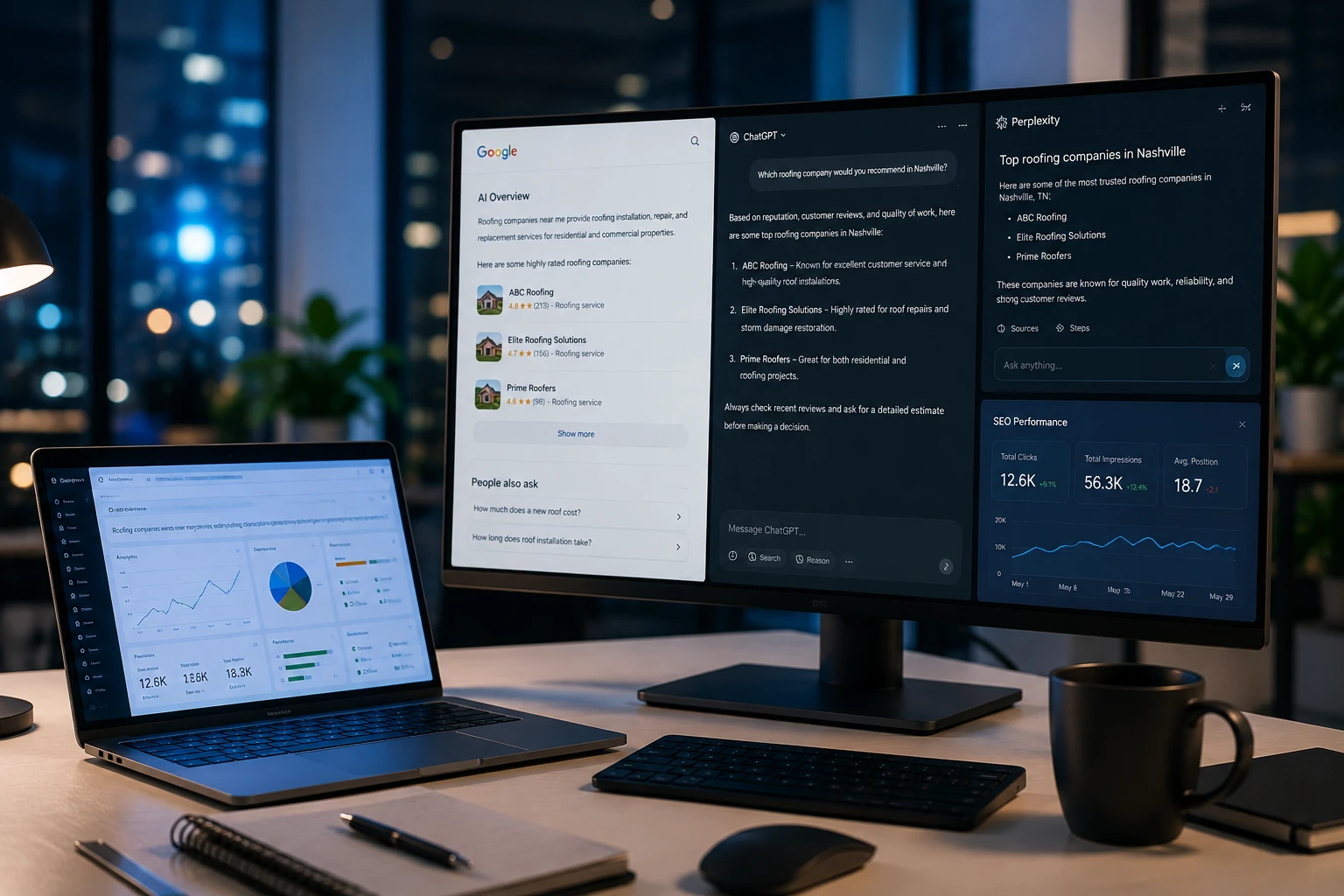
Customers increasingly discover companies through Google AI Overviews, ChatGPT, Perplexity, Claude, and other AI-powered search tools.
Instead of showing ten blue links, these systems generate direct answers—and recommend businesses they consider trustworthy.
The question has changed.
It’s no longer:
“How do I rank higher?”
It’s now:
“Will AI recommend my business?”
If the answer is no, your competitors may receive the lead before a customer even reaches Google’s traditional search results.
AI Search Isn’t Replacing SEO
One of the biggest misconceptions is that AI has made SEO obsolete.
It hasn’t.
AI search is built on the same foundation:
- high-quality websites
- authoritative content
- strong topical expertise
- technical SEO
- structured information
- trust signals
In other words, good SEO has become even more important.
The difference is that traditional rankings are no longer the only source of visibility.
Today, businesses need to optimize for both search engines and AI assistants.
AI doesn’t replace traditional SEO—it builds on it. If you’re still measuring success only by rankings, read Why SEO Rankings Alone Are No Longer Enough in 2026;
How Customers Search Has Changed
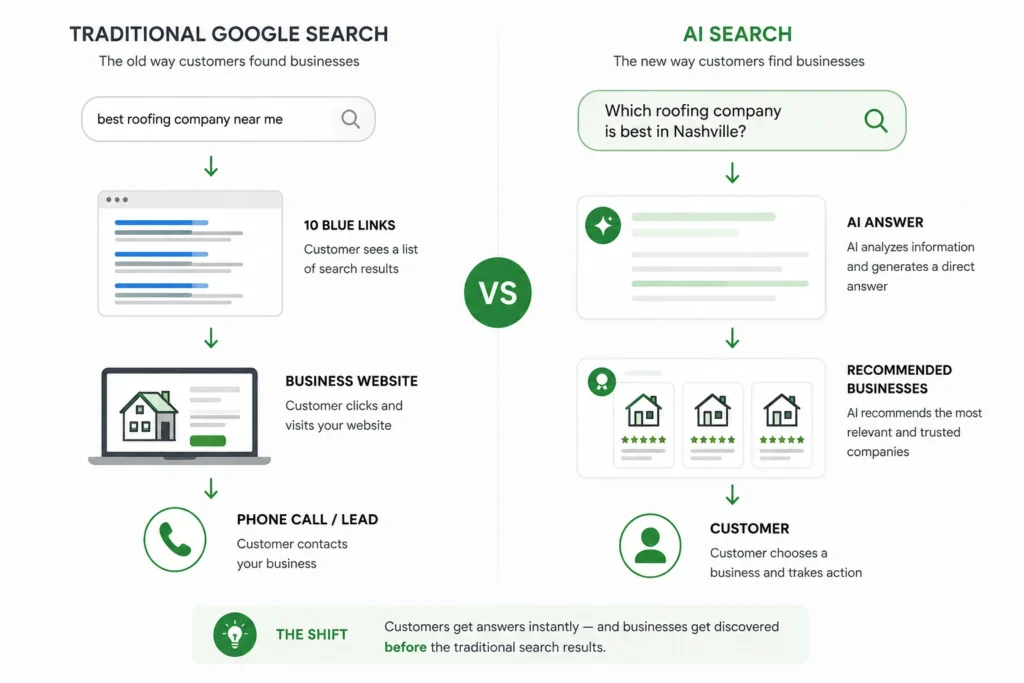
A few years ago, someone looking for a roofing company might search:
best roofing company near me
Today, they might ask:
Which roofing company has the best reputation in Nashville?
Or even:
Who would you recommend to replace my roof?
The AI doesn’t simply return websites.
It analyzes information from multiple trusted sources before generating a recommendation.
That completely changes the customer journey.
AI Looks for Trust, Not Just Rankings
Many businesses assume that ranking first automatically means they’ll appear in AI-generated answers.
That’s not how it works.
AI systems evaluate signals such as:
- expertise
- topical authority
- consistency across the web
- business reputation
- structured content
- customer reviews
- brand mentions
- content quality
A website with slightly lower rankings—but stronger authority—may be recommended more often than a higher-ranking competitor.
Businesses that focus only on technical SEO often miss the bigger picture. A successful strategy combines technical optimization, topical authority, and real business value. Learn more in Why Most SEO Audits Fail (And What Actually Matters in 2026).
What Businesses Should Do in 2026
As AI becomes part of the discovery process, website optimization also needs to evolve. I explain the practical foundations in [What Makes a Website AI-Friendly?]
Instead of chasing rankings alone, focus on becoming a trusted source.
That means:
Build topical authority
Publish content that answers real customer questions—not just keyword-focused articles.
Local businesses can see how this strategy works in practice in my guide to Local SEO Strategy for Service Businesses.
Strengthen your EEAT signals
Clearly demonstrate experience, expertise, authority, and trustworthiness.
Show who you are.
Explain why people should trust your advice.
Create content AI can understand
Organize information with:
- clear headings
- logical structure
- FAQ sections
- internal linking
- schema markup
- concise explanations
Well-structured content is significantly easier for AI systems to interpret.
Building AI-friendly content also requires a technically sound website. These 7 SEO Fixes That Can Increase Your Leads in 30 Days are a great place to start.
Think Beyond Google
Your customers may discover your business through:
- Google AI Overviews
- ChatGPT
- Perplexity
- Gemini
- Claude
Visibility across multiple AI platforms is becoming just as valuable as traditional rankings.
SEO Is Becoming Business Strategy
The companies that succeed over the next few years won’t simply “do SEO.”
They’ll build digital authority.
That means aligning:
- SEO
- content strategy
- user experience
- brand credibility
- AI visibility
Businesses that understand this shift early will have a significant competitive advantage.
Final Thoughts
SEO isn’t disappearing.
It’s evolving.
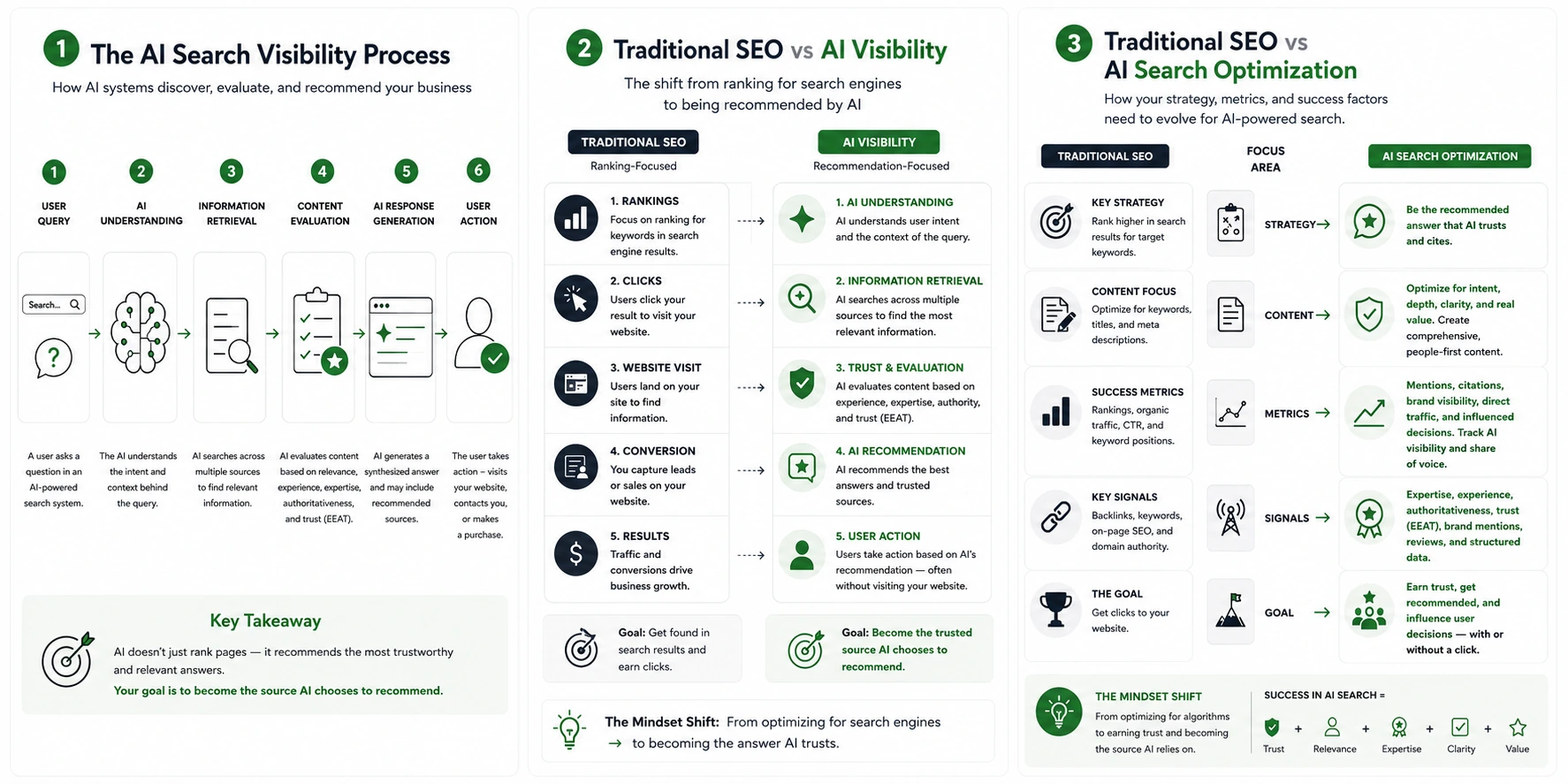
Instead of optimizing only for search engines, businesses now need to optimize for how artificial intelligence discovers, understands, and recommends information.
Companies that adapt today will be positioned to earn visibility—not only in Google Search, but wherever customers ask AI for recommendations tomorrow.
FAQ
Is SEO still worth investing in during 2026?
Absolutely. SEO remains one of the most sustainable long-term marketing channels. The difference is that modern SEO also supports visibility across AI-powered search experiences.
If you’re evaluating SEO as an investment rather than an expense, you may also find my guide How Much Does SEO Cost for Local Businesses in 2026? helpful.
Can ChatGPT recommend my business?
Yes. AI assistants often reference businesses with strong websites, authoritative content, and consistent trust signals across the web.
Is ranking #1 enough anymore?
Not necessarily. Rankings remain valuable, but AI-generated answers increasingly influence how users discover businesses.
How do I make my website AI-friendly?
Focus on high-quality content, topical authority, structured information, EEAT signals, technical SEO, and a strong overall user experience.
Conclusion
The future of SEO isn’t about choosing between Google and AI.
It’s about building a website that both humans and AI systems trust.
Businesses that invest in authority, expertise, and structured content today will be far better positioned for tomorrow’s search landscape.